
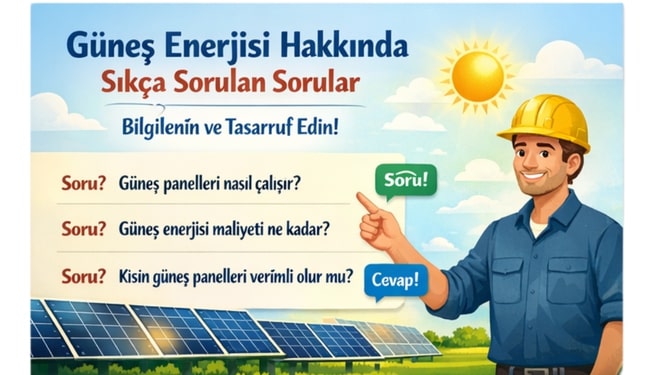
Solar Energy Guide: Frequently Asked Questions
Solar panels consist of photovoltaic cells that convert sunlight directly into electricity. These cells interact with light photons and generate an electric current by setting electrons in motion. In other words, the light that is lost on the hot surface of the sun can meet your home’s energy needs.
The area occupied by solar panels varies depending on your total energy requirement. Generally, a 1 kW system requires an average area of 7–10 square meters. Imagine that with just a few panels, you can significantly reduce your home’s energy bill or even bring it down to zero!
Initial costs may seem high, but since they provide energy savings in the long term, it is possible to recover your investment within a few years. In addition, these costs can be reduced through government incentives.
Yes, even in cloudy weather, since clouds do not completely block sunlight, panels can still generate electricity. While clouds reduce the intensity of the light, the panels can still function.
Generally, solar panels can last 25–30 years. However, this period can be extended with maintenance and cleaning. Imagine that a new technology is actually like acquiring a long-lasting friend.
You can benefit from solar energy in many areas, from lighting and heating systems at home to pool pumps and electrical appliances. It can adapt to every place and make your life easier!
Working with an expert is the most effective way to have your home’s needs analyzed and the appropriate system installed. With expert support, you can make the right investment and achieve higher efficiency.
Solar technology produces less carbon emissions compared to fossil fuels. At the same time, since it is a renewable energy source, it causes minimal harm to nature. In other words, it plays an important role in protecting the environment.
It may vary according to the regulations determined by local authorities. Before installing a solar energy system, be sure to contact local authorities.
Regular maintenance and panel cleaning increase your energy production. In addition, you can minimize energy losses with correct placement and angles.
Solar energy offers an important solution both economically and ecologically. These questions and answers can help you better understand the advantages of these systems.

Things You Are Curious About Solar Energy: 10 Frequently Asked Questions and Answers
Solar energy is the light and heat energy obtained from the Sun. This energy can be converted into electrical energy through panels and used in homes and workplaces. Imagine that every day, the Sun offers the largest energy source on Earth!
The lifespan of solar panels generally varies between 25 and 30 years. However, with proper maintenance, this lifespan can be extended even further. In other words, once installed, you can benefit from sunlight for many years.
Although costs may seem high at the beginning, thanks to government incentives and decreasing prices over time, this investment becomes profitable. Your annual energy savings can quickly amortize the initial expenses.
Yes, efficiency may vary depending on weather conditions. The energy obtained may decrease on rainy or cloudy days. But you can overcome this situation with solar energy storage systems!
In short, yes! Solar energy can adapt to both urban and rural areas. If your home’s roof receives sufficient sunlight, why not take advantage of this opportunity?
Absolutely! Solar energy is a clean and renewable energy source, unlike fossil fuels. It reduces the emission of harmful gases into the atmosphere.
Learning more about solar energy and discovering its potential benefits is an important step toward a sustainable future. By answering the questions in your mind on this subject, it is possible to make an informed decision!

Solar Energy Myth: Common Misconceptions and Their Answers
Another common myth is that solar energy systems are extremely expensive. Yes, an initial investment is required, but when you think about it in the long term, everything changes. While solar panels provide savings over the years, they can significantly reduce your energy costs. In addition, various government incentives can make the situation even more attractive.
For those who think that solar energy can only be used on private properties, let us make a reminder: solar energy systems can also be built as large-scale solar power plants. This means that you can obtain massive amounts of energy from agricultural lands or desert areas. In other words, you can utilize the sun’s energy everywhere.
Another common misconception is that solar energy systems do not require maintenance. Like any technology, solar energy systems require maintenance over time. However, this maintenance is usually fast and low-cost. Simple procedures such as cleaning and inspection are generally sufficient.
Myths about solar energy have been shaped in the minds of those who do not understand it. With a mind equipped with knowledge, it is quite easy to dispel these myths. Giving the sun a chance can illuminate your future!

Solar Energy Systems: 10 Questions Most Frequently Asked by Households
Solar energy is a resource obtained by converting sunlight into energy. Through solar panels, this light is converted into electrical energy and becomes usable in daily life.
Solar panels convert sunlight into electrical energy thanks to photovoltaic cells. This energy can be used by integrating it into the home’s electrical system.
A high initial investment may be required, but thanks to long-term energy savings and government incentives, the costs are quickly covered. Some households can even recover the system cost within a few years.
Not every home may be suitable for solar energy systems. Factors such as roof structure, orientation, and duration of sunlight exposure affect system efficiency.
Actually, it is quite simple! Light cleaning a few times a year is sufficient. Rainwater often cleans the panels.
It can meet the energy needs of most homes, but in some cases, additional energy sources may be required.
Absolutely! Solar energy plays an important role in environmental protection by reducing carbon emissions.
Switching to solar energy can be advantageous to save money during periods when energy costs increase.
It is especially common in countries with abundant sunlight. However, it is now rapidly spreading in many other countries as well.
Yes, many countries and cities offer various incentives that encourage the installation of solar energy systems. These supports can significantly reduce costs.
Solar energy emerges as an important step for the future of our era. Evaluating this potential in every home creates a great opportunity for a sustainable future.